The forex market is open twenty-four hours a day, five days a week, but that does not mean every hour is equally useful. Activity rises and falls as financial centers around the world open and close. Spreads tighten in busy periods and widen in quiet ones. Volatility clusters around certain hours, and some currency pairs are far more active at particular times.
Understanding trading sessions helps you choose when to trade, which pairs to focus on and when to stay away. This guide explains the major sessions, overlaps and practical scheduling tips. It is educational, not advice, and trading carries a high risk of loss.
Why Forex Never Sleeps
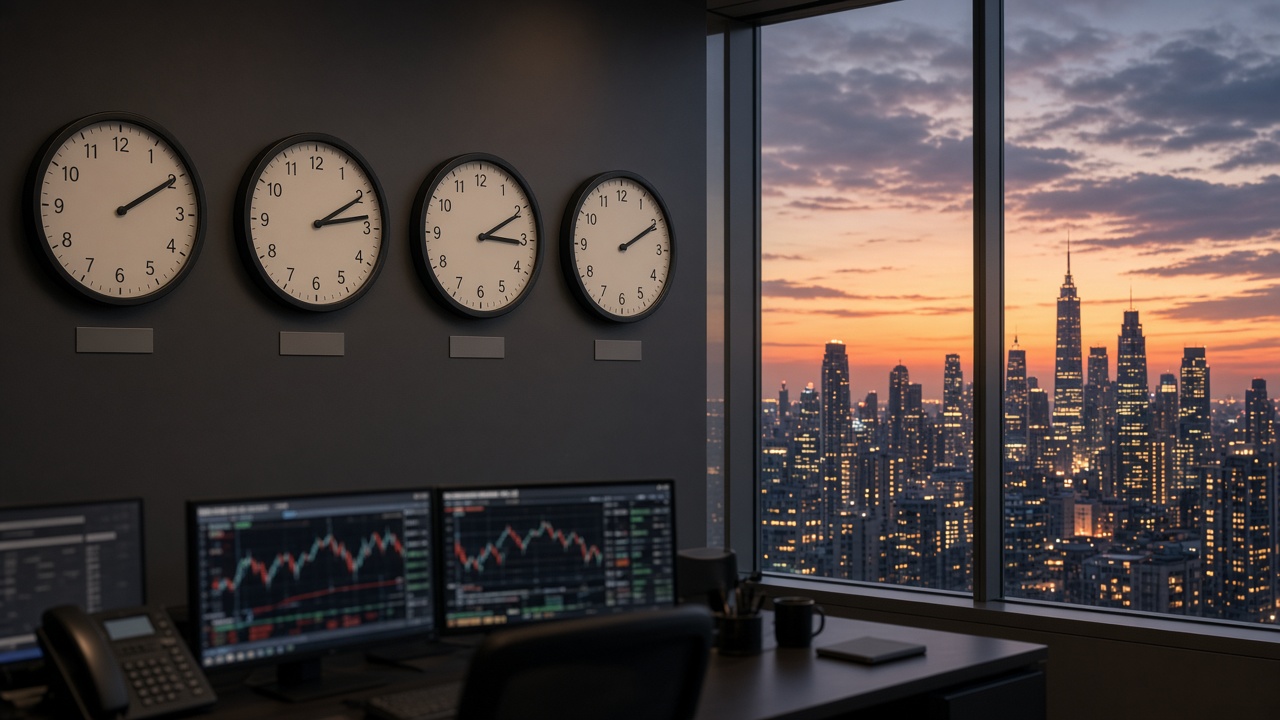
Forex has no single exchange. Trading flows through banks and brokers worldwide, and as one major financial center closes, another opens. The trading day begins in the Asia-Pacific region, moves to Europe and then to North America before the cycle repeats.

The Four Major Sessions
Times below are approximate and expressed in Greenwich Mean Time. They shift by an hour in many regions during daylight saving changes, so always check the current schedule for your time zone.
| Session | Approximate hours (GMT) | Main centers |
|---|---|---|
| Sydney | 22:00 to 07:00 | Sydney, Wellington |
| Tokyo | 00:00 to 09:00 | Tokyo, Singapore, Hong Kong |
| London | 08:00 to 17:00 | London, Frankfurt, Zurich |
| New York | 13:00 to 22:00 | New York, Toronto |
The Sydney session
The week begins here. Liquidity is thinner, and spreads can be wider. It can be calm, though important Australian and New Zealand data releases can move AUD and NZD pairs. Some traders use this time to review the week ahead.
The Tokyo session
Also called the Asian session, it features the yen, Australian dollar and other regional currencies. Volatility is often lower than in London and New York, with ranges more common, though data releases from Japan, China and Australia and central bank decisions can cause sharp moves. Pairs such as USD/JPY, AUD/JPY and AUD/USD are most active.
The London session
London is the largest forex center, handling a significant share of global volume. When Europe opens, liquidity and volatility rise noticeably. Euro, pound and Swiss franc pairs are most active, and trends often begin here. Major European and U.K. data releases and central bank statements can drive strong moves.
The New York session
The U.S. session brings heavy participation, particularly when American economic data is released. Dollar pairs are in focus. Liquidity remains strong in the first half of the session, especially during the overlap with London, then tapers as Europe closes.
The Session Overlaps
Overlaps combine liquidity from two financial centers and typically produce the best trading conditions.
- Tokyo and London overlap (around 08:00 to 09:00 GMT): A short period with increased activity in yen and euro crosses.
- London and New York overlap (around 13:00 to 17:00 GMT): The most active period of the day, with the tightest spreads and highest volume on major pairs such as EUR/USD, GBP/USD and USD/CHF. Large moves are common, especially around U.S. data releases.
- Sydney and Tokyo overlap: Moderately more active for Asian-Pacific currencies.
Which Pairs Suit Which Session?
- Asian hours: USD/JPY, AUD/USD, NZD/USD, AUD/JPY and other pairs involving Pacific currencies.
- European hours: EUR/USD, GBP/USD, EUR/GBP, EUR/CHF and USD/CHF.
- U.S. hours: EUR/USD, GBP/USD, USD/CAD and other dollar pairs.
Trading a pair during its home session often means lower spreads and cleaner price action.
Market Behavior During the Day
Typical patterns, though not guaranteed:
- The Asian session often builds ranges, which may then be broken at the London open.
- The London open can bring a surge of volatility as European traders react to overnight developments. False breakouts are also common as liquidity enters.
- The New York open often brings a second wave of volatility, especially at 13:30 GMT when many major U.S. reports are released.
- Late New York hours often see reduced liquidity and slower moves, and spreads may widen near the daily rollover at 22:00 GMT.
- Fridays: Volume often declines in the afternoon as traders close positions ahead of the weekend, and some traders avoid holding trades over the weekend because of gap risk.
High-Impact Events and Timing
Economic releases and central bank announcements often determine when volatility spikes. Examples include:
- U.S. employment reports and inflation data
- Interest rate decisions from the Federal Reserve, European Central Bank, Bank of England and others
- Central bank speeches
- Gross domestic product releases
Check an economic calendar each day and mark events relevant to your pairs. Decide in advance whether you will trade through them, reduce size or stand aside.
How to Choose Your Trading Hours
Consider the following:
- Your time zone and schedule. Trade when you can focus, not when you are tired or distracted.
- Your strategy. Scalpers and day traders often prefer high-liquidity overlaps. Swing traders may only check charts a few times a day.
- Your preferred pairs. Match your hours to when those pairs are most active.
- Your tolerance for volatility. The London and New York overlap offers larger moves but also more risk. Quiet sessions may suit range strategies.
- Costs. Spreads are generally tighter in busy sessions.
A sensible approach is to focus on a small window each day, such as the first few hours of the London session, rather than monitoring charts all day. Fewer, higher-quality trades tend to outperform constant screen time.
Weekend Gaps and Rollover
The market closes on Friday evening and reopens Sunday evening. If major news breaks over the weekend, prices can open with a gap, skipping stop-loss levels. Many traders reduce risk before the weekend.
The daily rollover around 22:00 GMT is when positions held overnight are charged or credited swap, and spreads can briefly widen. Avoid entering new trades during this window if you are sensitive to costs.
Common Mistakes
- Trading during low-liquidity hours without understanding spread costs
- Ignoring daylight saving differences
- Trading every session instead of focusing on one or two
- Opening trades right before major news without a plan
- Holding large positions over the weekend without considering gap risk
- Using a pair outside its most active session without adjusting expectations
Practical Tips
- Use a session clock or indicator on your platform
- Journal the time of each trade to learn when you perform best
- Adjust strategies to the character of each session
- Keep an eye on holidays, because bank holidays reduce liquidity
Final Thoughts
Forex may run around the clock, but your best opportunities are concentrated in a few hours. Learn when each session opens, favor pairs in their most active period, avoid thin markets and plan around news. A consistent schedule makes it easier to stay disciplined.
This article is educational and not investment advice. Session times are approximate and change with daylight saving, so verify them for your region. Leveraged trading carries a high level of risk.