Every crypto journey starts with a trade. You exchange local currency for a coin, swap one token for another or move assets between networks. The platform you choose determines what you pay, who controls your funds and how exposed you are to hacks, failures and mistakes. The two broad categories, centralized exchanges and decentralized exchanges, take very different approaches.
This guide compares them across custody, fees, security, privacy, regulation and usability, so you can choose the right tool for each job. It is educational, not financial advice.
What Is a Centralized Exchange?
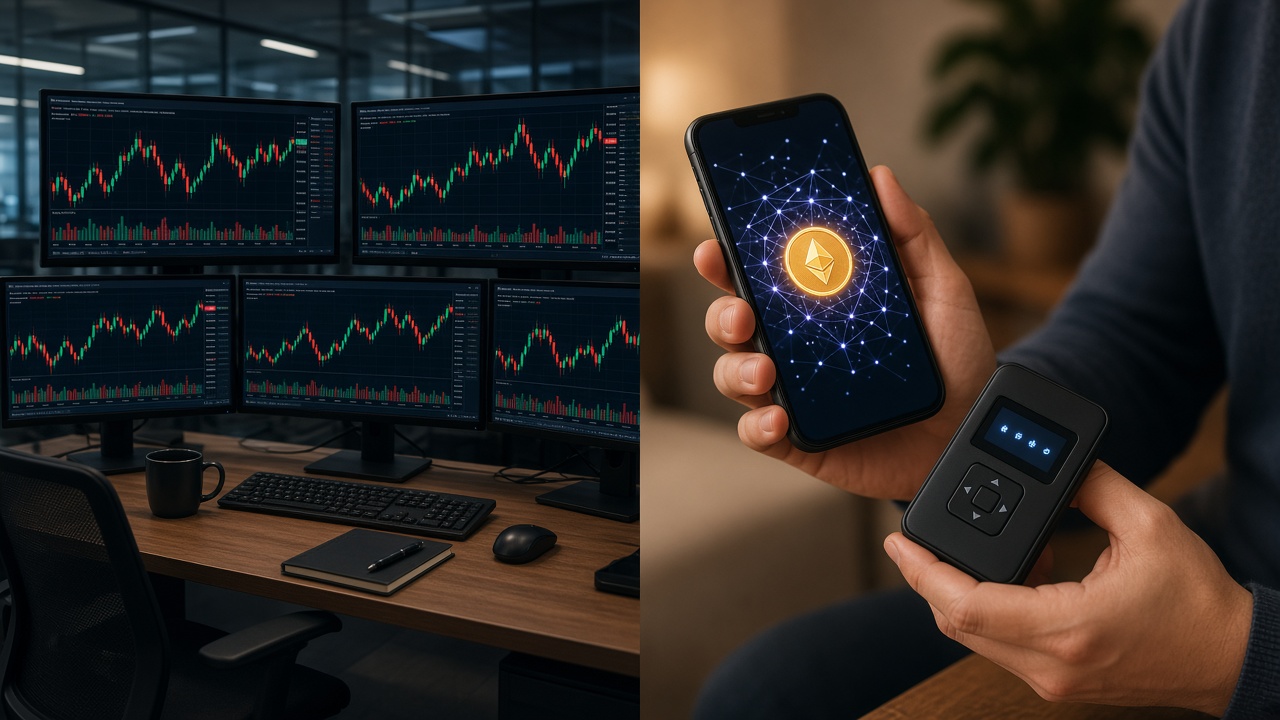
A centralized exchange, often abbreviated CEX, is a company that runs a trading platform. You create an account, verify your identity, deposit money or crypto and trade within the platform’s systems. The exchange holds your assets, keeps an internal record of balances and matches buyers and sellers through an order book.
Large exchanges offer fiat on-ramps, such as bank transfers and cards, plus features like margin trading, staking and customer support.
What Is a Decentralized Exchange?
A decentralized exchange, or DEX, is a set of smart contracts that let users trade directly from their own wallets. There is no company holding your funds. Most DEXs use automated market makers, in which liquidity pools set prices through a formula. You connect your wallet, approve a token and swap, with the contract executing the trade on the blockchain.
DEXs support a vast range of tokens, including new ones that centralized exchanges have not listed, and they operate without account registration.
Key Differences
Custody
On a CEX, the exchange controls your private keys. Your balance is an IOU from the company. This is convenient but means you rely on its solvency and honesty. The saying “not your keys, not your coins” reflects this. Past failures, where exchanges collapsed or misused customer funds, left users unable to withdraw.
On a DEX, you keep your keys and your funds stay in your wallet until the moment of the swap. You avoid exchange insolvency risk, but you take on responsibility for security and for any mistake you make.
Ease of use
CEXs are generally easier: familiar interfaces, bank connections, password recovery and support teams. DEXs require a wallet, some blockchain knowledge, awareness of networks and gas fees and care with approvals. Beginners can find them intimidating.
Fees
CEXs charge trading fees, often a fraction of a percent, plus withdrawal fees and possible spreads on simple buy buttons. DEXs charge liquidity pool fees, typically from 0.01 to 1 percent, plus network gas fees, which can be significant on congested networks. Large trades on small pools can also suffer slippage, where the price moves against you as you trade.
Liquidity
Major centralized exchanges generally offer deep liquidity for popular pairs, which means tight spreads and easy execution of large orders. DEX liquidity varies widely. Top pools are deep, but obscure tokens can have thin liquidity and extreme price swings.
Token selection
CEXs list assets after review, though standards vary. DEXs allow anyone to create a pool for any token, which means more choice and far more scams. Always verify contract addresses.
Privacy
CEXs typically require identity verification, linking your account to your real identity and exposing data to breaches. DEXs do not ask for personal information, but blockchain transactions are public and traceable, so they are pseudonymous rather than anonymous.
Regulation and protections
CEXs are generally subject to licensing, anti-money-laundering rules and, in some jurisdictions, consumer protections, although coverage differs greatly and funds are not usually covered by deposit insurance. DEXs operate in a gray area in many places, offer little recourse if something goes wrong and may face evolving regulatory scrutiny.
Security risks
CEXs are attractive targets for hackers because they hold large pools of funds. Reputable platforms invest heavily in security and some keep reserves in cold storage, but breaches have occurred. Account takeovers through phishing or weak passwords are another risk.
DEXs remove the central honeypot but introduce smart contract risk, malicious token approvals, fake interfaces and scam tokens. A mistake like signing a harmful transaction can empty a wallet instantly.
Control and censorship
A CEX can freeze accounts, delist assets, restrict regions or halt withdrawals. A DEX contract is typically harder to censor, though front-end websites can block users and some tokens have built-in freeze features.
Comparison Table
| Factor | Centralized exchange | Decentralized exchange |
|---|---|---|
| Who holds your funds | The company | You |
| Sign-up | Account and identity checks | Wallet only |
| Fiat on-ramp | Yes, usually | Rarely directly |
| Ease for beginners | High | Moderate to low |
| Token variety | Curated | Almost unlimited |
| Main risks | Insolvency, hacks, freezes | Smart contract bugs, scams, user error |
| Support | Customer service | Community only |
Which Should You Use?
Many experienced users use both, matching the tool to the task.
- Buying crypto with local currency: A regulated centralized exchange is usually the most practical entry point.
- Active trading on major pairs: CEXs offer liquidity and advanced tools.
- Holding long-term: Withdraw significant amounts to a personal wallet rather than leaving them on an exchange.
- Swapping tokens or using decentralized applications: A reputable DEX provides access without custodial risk.
- Early-stage tokens: DEXs offer access, but these assets carry very high risk.
How to Choose a Centralized Exchange
- Regulatory status: Check for licenses in your country and a track record of compliance.
- Security practices: Look for two-factor authentication, cold storage policies, proof-of-reserves reports and a history of incident handling.
- Reputation: Consider years of operation, user reviews and transparency.
- Fees: Compare trading, deposit and withdrawal costs, including hidden spreads.
- Supported assets and payment methods.
- Withdrawal reliability: Test with small amounts.
How to Use a DEX Safely
- Use official links from the protocol’s verified channels
- Check token contract addresses on a block explorer
- Set sensible slippage limits
- Be careful with token approvals, and revoke those you no longer need
- Start with small trades
- Keep a separate wallet for experimentation
- Be wary of tokens with sudden hype, because some cannot be sold after purchase
Protecting Yourself on Any Platform
- Use unique, strong passwords and a password manager.
- Enable two-factor authentication using an authenticator app or security key, not just SMS.
- Beware of phishing emails, fake apps and impersonators.
- Use withdrawal address whitelists where available.
- Do not keep more on an exchange than you are willing to risk.
- Keep records of every trade for tax reporting.
Final Thoughts
Centralized and decentralized exchanges are not rivals so much as different trade-offs between convenience and control. Start with a reputable regulated platform to learn, move long-term holdings to self-custody and explore decentralized options gradually and carefully. Whatever you choose, safeguard your accounts and stay skeptical.
This article is educational and not investment advice. Trading cryptocurrency involves risk of loss.