“Not your keys, not your coins” is one of the most repeated phrases in the Bitcoin community. It is blunt, but it points to a real question every holder must answer: who controls the private keys that give access to your bitcoin? The answer determines your risks, your responsibilities and the type of wallet that makes sense for you.
This guide explains how bitcoin wallets work, compares the main types, and offers practical advice on choosing and securing one. It is educational, not advice, and mistakes with crypto storage can be irreversible.
What a Wallet Actually Does
A Bitcoin wallet does not store coins. Bitcoin exists as entries on the blockchain. What the wallet stores are the private keys that prove you may spend particular outputs, and it provides an interface to create, sign and broadcast transactions.
- Private key: A secret number that authorizes spending.
- Public key and address: Derived from the private key, used to receive funds.
- Seed phrase (recovery phrase): A list of typically 12 or 24 words that can regenerate all the keys in a wallet. Anyone with the phrase can take your bitcoin, and anyone who loses every copy of it and their device loses access.
Modern wallets use hierarchical deterministic design, meaning a single seed generates many keys and addresses. Backing up the seed phrase once backs up the entire wallet.
Custodial vs. Non-Custodial Wallets
Custodial wallets
A third party, such as an exchange or app, holds the keys for you. You log in with a username and password, and the provider handles security and recovery.
Advantages:
- Easy to use, with password reset options
- Integrated buying and selling
- Customer support
Disadvantages:
- You rely on the company’s security, solvency and policies
- Funds can be frozen, restricted or lost if the platform fails
- Privacy is limited because of identity verification
Non-custodial (self-custody) wallets
You hold the keys and the recovery phrase. No one can freeze or take your funds, but no one can help you recover them if you lose access.
Advantages:
- Full control and ownership
- Not exposed to platform failures
- Greater privacy and flexibility
Disadvantages:
- Responsibility for backups and security
- Learning curve
- Irreversible mistakes
Hot Wallets vs. Cold Wallets
Hot wallets
Hot wallets are connected to the internet. They include mobile apps, desktop software and browser-based wallets. They are convenient for frequent use and small amounts, but are exposed to malware, phishing and device compromise.
Cold wallets
Cold storage keeps private keys offline. The most common form is a hardware wallet, though paper and metal backups can also fall in this category. Cold storage greatly reduces exposure to online attacks and is widely recommended for larger holdings.
Main Wallet Types Compared
| Type | Control | Internet exposure | Best for | Main risk |
|---|---|---|---|---|
| Exchange account | Custodial | Online | Trading, small balances | Platform failure or hack |
| Mobile wallet | Usually non-custodial | Hot | Daily use and small amounts | Phone loss or malware |
| Desktop wallet | Non-custodial | Hot | Intermediate users | Computer malware |
| Browser wallet | Varies | Hot | Quick access | Phishing and extensions |
| Hardware wallet | Non-custodial | Cold | Long-term holdings | Lost backup or fake device |
| Paper or metal backup | Non-custodial | Offline | Backup of seed | Physical loss or damage |
| Multisignature wallet | Shared | Varies | Large or shared funds | Complexity |
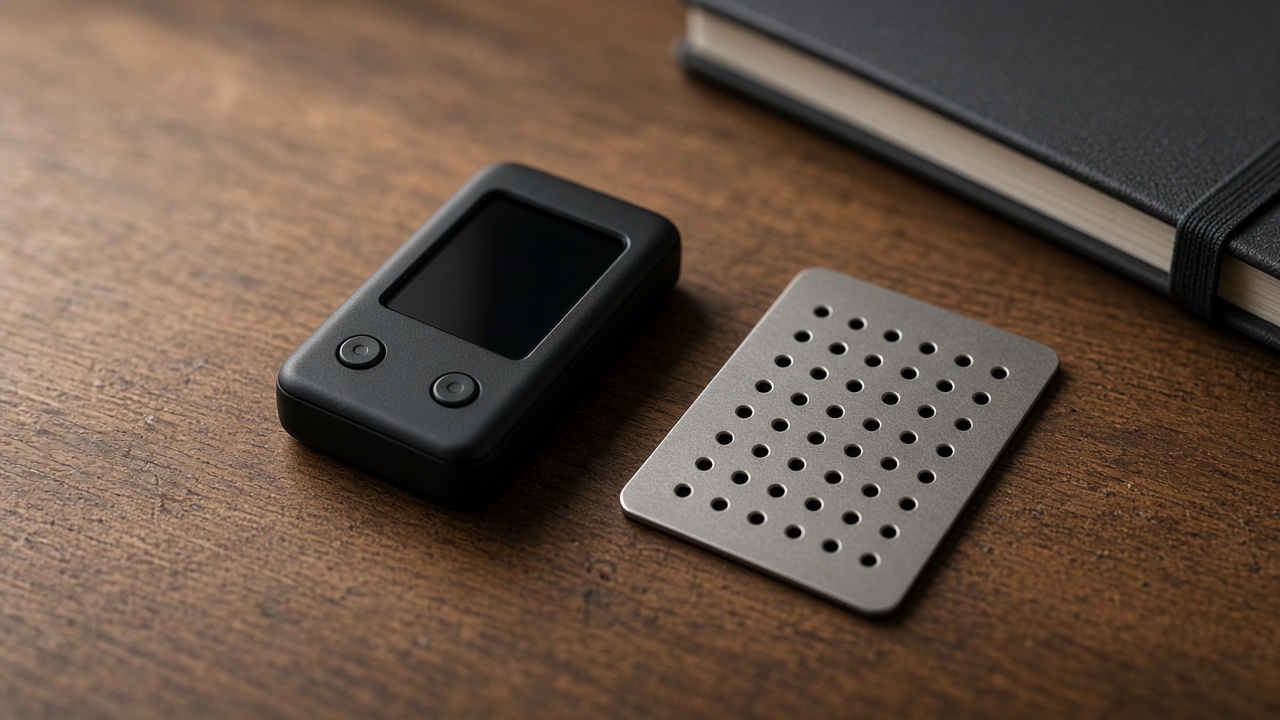
Hardware Wallets
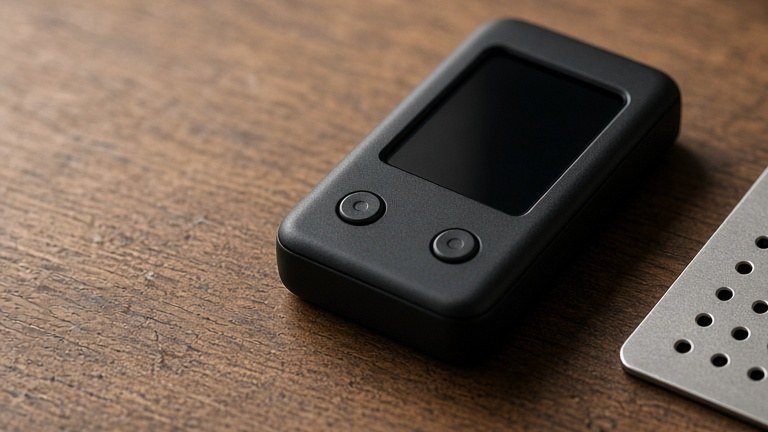
A hardware wallet is a small device that generates and stores keys in a secure chip and signs transactions internally. The keys never leave the device, so even if your computer is infected, an attacker cannot steal them without physically approving transactions on the device.
Tips for using one:
- Buy directly from the manufacturer or an authorized reseller to avoid tampered devices.
- Initialize it yourself, and never use a pre-written seed phrase from the box.
- Verify addresses on the device screen before confirming.
- Keep firmware updated from official sources.
- Store the recovery phrase separately from the device.
Software Wallets
Mobile and desktop wallets are suitable for smaller balances or active use. Look for:
- Open-source code and a good reputation
- Regular updates
- Support for modern address formats that lower fees
- Optional features such as coin control and connection to your own node
Treat them like a physical wallet: keep only the amount you would be comfortable carrying around.
Multisignature Wallets
Multisig requires more than one key to authorize a transaction, such as two of three. This spreads risk: losing one key does not lose funds, and an attacker needs more than one. Multisig suits larger holdings, families and businesses, but it is more complex to set up and recover. Keep clear documentation for heirs and collaborators.
How to Back Up Your Seed Phrase
- Write it on paper or stamp it on metal, using the official word order.
- Never store it digitally, such as in photos, cloud notes, email or messaging apps.
- Store copies in separate secure locations, such as a safe or safety deposit box.
- Consider fire and water protection, with metal plates for durable backups.
- Test recovery with a small amount before depending on a backup.
- Plan for inheritance, ensuring trusted people can access funds if something happens to you, without giving anyone premature control.
- Avoid advertising holdings. Do not label backups “bitcoin seed.”
Some wallets support an optional passphrase that adds an extra layer. It improves security but creates another thing that can be lost, so use it only if you understand it fully.
Choosing the Right Setup
- Small amounts for spending or learning: A reputable mobile wallet or an exchange account may be enough.
- Medium holdings: A hardware wallet with a secure backup is a strong option.
- Large or long-term holdings: Hardware wallets, possibly in a multisig configuration, with carefully planned backups and inheritance procedures.
- Active trading: Keep a trading balance on an exchange, and move the rest to self-custody.
A common approach is a two-tier structure: a hot wallet for spending money and a cold wallet for savings.
Security Best Practices
- Enable two-factor authentication on any custodial service
- Keep devices updated and free of unknown software
- Verify every address before sending, and send a small test amount first
- Beware of fake wallet apps, browser extensions and support messages
- Never enter your seed phrase on a website or share it with anyone
- Use a clean device for high-value operations
- Use a password manager for accounts, but never for the seed phrase
Common Mistakes
- Photographing or emailing the seed phrase
- Buying a used or second-hand hardware wallet
- Leaving large amounts on an exchange for years without considering the risk
- Falling for support scams that ask for the recovery phrase
- Forgetting to back up before losing a device
- Making a backup that is not tested
- Sending funds to an address on the wrong network
Final Thoughts
The right wallet depends on how much you hold, how you plan to use it and how comfortable you are taking responsibility for security. Custodial wallets offer convenience and support, while self-custody offers control and independence. Whatever you choose, protect your recovery phrase, test your backups and keep your setup as simple as you can safely manage.
This article is educational and not financial advice. Cryptocurrency storage carries risk, including permanent loss of funds if keys are lost or stolen.